
Traceability is no longer about logistics, but about responsible leadership.
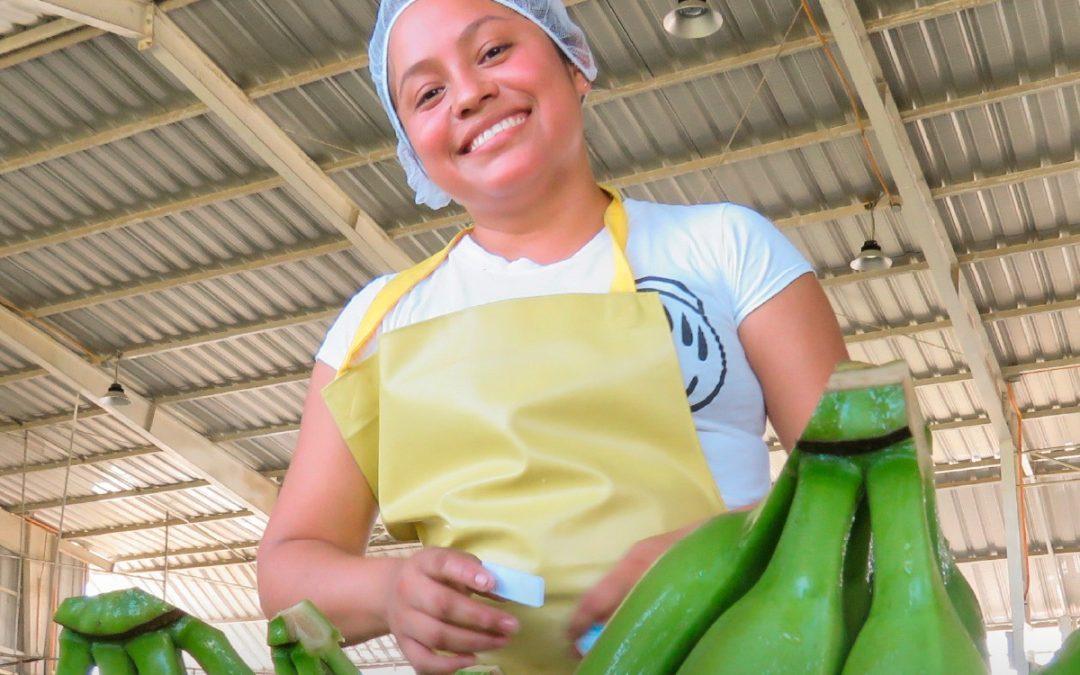
Years ago, a worker on one of our banana farms said something to me that I will never forget:
“With my work, I’m not just planting bananas — I’m feeding my family and the world.”
That sentence transformed the way I understand sustainability. It reminded me that behind every box we export, there are people, stories, and decisions that go far beyond the boundaries of a farm or a country. Today more than ever, companies must see the value chain not as a commercial route, but as a space for human impact.
Traceability as Leadership
For many years, traceability was understood as a technical tool — knowing where each product comes from and where it goes. But the world has changed. According to McKinsey & Company’s State of Traceability 2024 report, 70% of global leaders believe traceability will be the main driver of sustainable transformation in the next decade. And it’s not just about technology: it’s about trust, transparency, and consistency.
Harvard Business Review (2023) highlights that companies with traceable and responsible value chains generate 20% higher consumer loyalty and attract more young talent, because new generations no longer choose only products — they choose values.
Traceability is not only knowing where a product comes from, but where our responsibility goes.
From Data to Purpose
Traceability alone does not change reality; what transforms it is the intention behind it. When a company decides that every link — production, transportation, commercialization, and export — must reflect the same ethical and environmental principles, purpose begins to take shape.
That consistency is what differentiates organizations that merely comply with standards from those that inspire genuine trust. In my experience, global consumers are no longer asking only about product quality, but about the quality of the relationships that made it possible.
Value Chains With Real Impact
Globally, the FAO estimates that a responsible agricultural value chain can increase productivity by 25%, reduce post-harvest losses by up to 30%, and improve incomes for local communities. But achieving this requires leadership, long-term vision, and cross-sector collaboration.
Food and beverage companies like Danone and Unilever have shown that integrating sustainability throughout the chain generates both efficiency and long-lasting reputation. Traceability is no longer a requirement — it becomes a competitive advantage.
How We Live This at AgroAmerica
At AgroAmerica, our daily goal is to turn this vision into practice. We produce, commercialize, and export directly — a vertically integrated model that allows us to ensure sustainability at every stage of the chain.
Over the years, we have earned more than 10 international certifications that support this integral approach: Rainforest Alliance, Global G.A.P., BASC, SCS Sustainably Grown Certified, and C-TPAT, among others.
But beyond certifications, what truly matters is impact. Through our Human Development Center in partnership with the University of Colorado, we have provided access to education, maternal and child programs, and quality healthcare to more than 35,000 people in our surrounding communities.
Each of these actions aligns with the United Nations Sustainable Development Goals — decent work, health, education, gender equality, responsible production, and partnerships — not as isolated objectives, but as a coherent pathway toward the common good.
Every box we export carries more than fruit: it carries commitment, dignity, and purpose.
Looking Ahead
Building a value chain with purpose is not the task of a single day. It is a daily decision — a commitment that begins in the field and ends on the tables of millions of families around the world.
Every time I remember that phrase — “I feed my family and the world” — I am reminded that true traceability is not only found in systems, but in the people who make each step of the process possible.
And that, in the end, is the highest purpose of a responsible company: to be a bridge between the earth and hope.